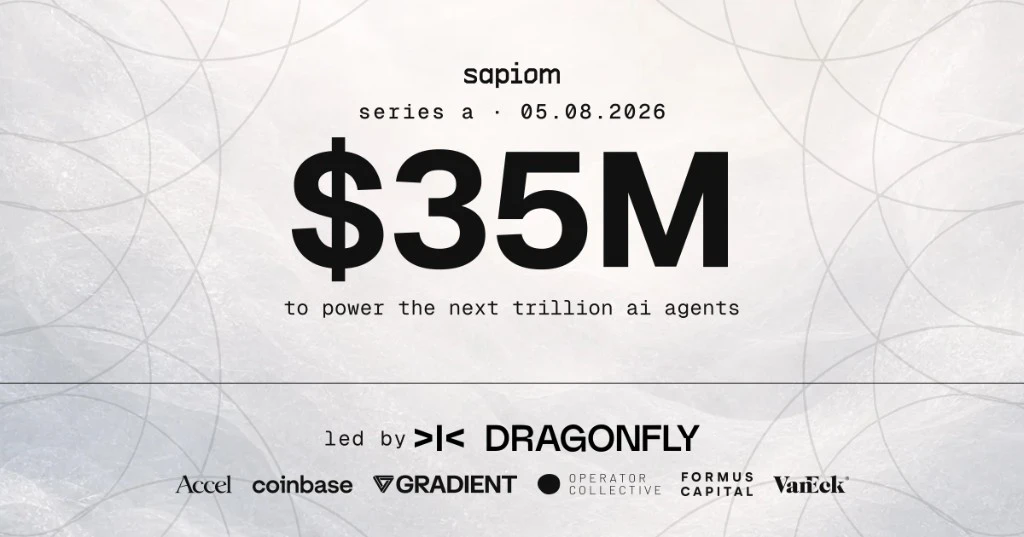
We raised $15.75 million. Accel led the round, joined by Gradient, Array Ventures, Okta Ventures, Menlo Ventures, Anthropic, Coinbase Ventures, Formus Capital, and Operator Collective. The money goes to one job: the infrastructure an agent needs the moment it stops being a demo.
The thesis.
The next trillion buyers will not be human. Software already provisions compute, buys data, and calls paid services on someone’s behalf, and it does all of that through systems designed around a person in the loop. An API key belongs to an account a human opened. A billing relationship is signed by a human. A permission is granted by a human who read the screen and clicked.
The access gap.
An agent can reason beautifully and still be powerless, because it cannot pay for a search, provision a sandbox, or prove it is allowed to send an email. An agent’s power is its reasoning times its access, and access is the part nobody built.
I came to this from the other side of it. I was Director of Engineering for payments at Shopify, where the team scaled Shop Pay past $100 billion in GMV and shipped Shop Cash. Before that I co-founded Earny, which was acquired in 2021. The pattern held everywhere: the money layer decides what software is allowed to do, and every part of it assumes a person is watching.
The layer underneath.
Sapiom runs that layer. You write an agent as ordinary TypeScript. The platform gives each step the capabilities it needs through one integration, executes the loop on managed infrastructure, enforces budgets and permissions before anything runs, and returns a receipt for every metered call.
A finished run reads as a ledger: the step, the capability, the units, the unit price, and the trace it belongs to. This round buys the time to build that properly and to build it in public.